

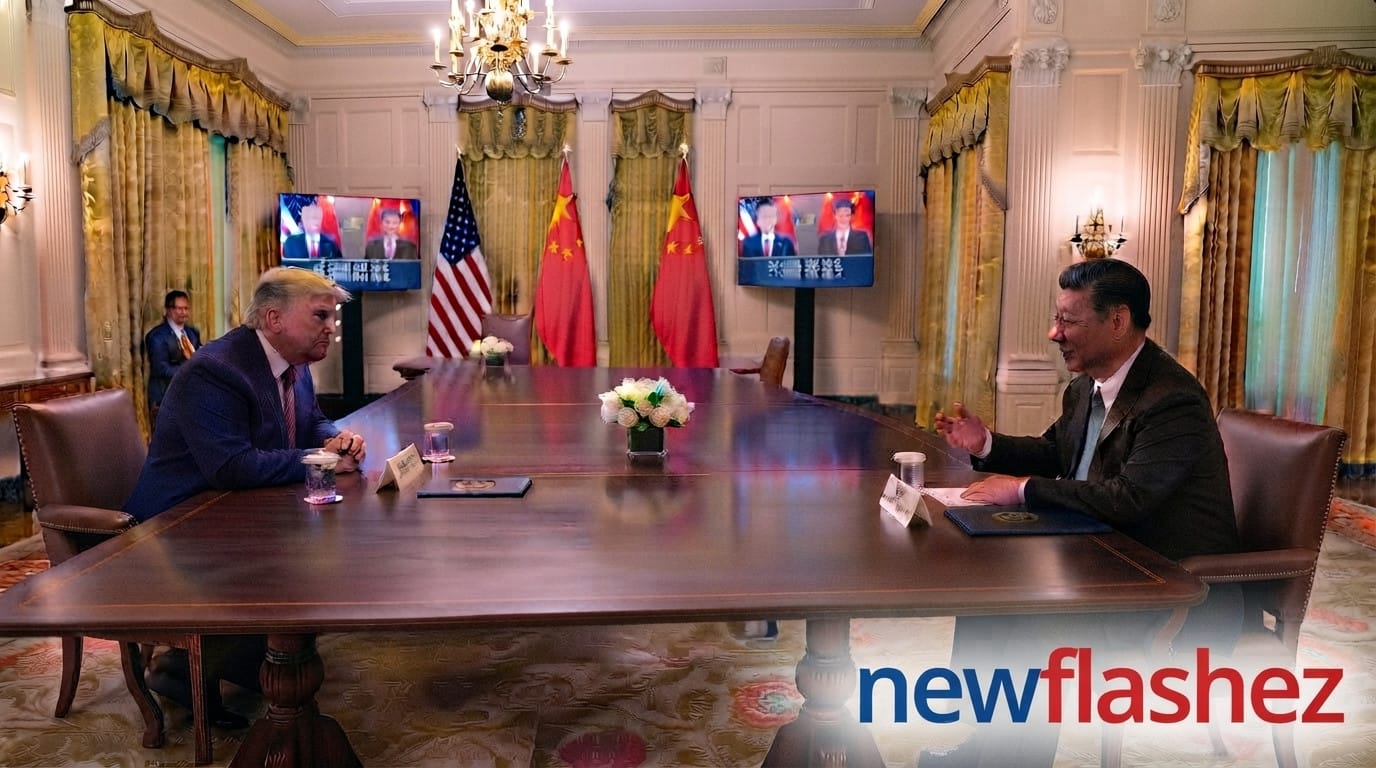
The geopolitical arena in Washington D.C. faces a momentous collision of international crises as high-stakes diplomacy unfolds across multiple fronts. Central to these developments is the ongoing US China Summit, which brings world leaders together to negotiate vital security and economic agreements during the US China Summit. For deeper analysis on global affairs, visit the newflashez politics department. At the same time, simultaneous tensions flare in the Middle East as Washington firmly rejects a proposed seven-day Iranian roadmap aimed at reopening the strategic Strait of Hormuz and reviving stagnant nuclear negotiations.
Diplomatic Tensions at the US China Summit
The high-profile encounters defining the US China Summit have dominated news cycles worldwide. According to recent reports from the Associated Press and Business Today, President Donald Trump and Chinese President Xi Jinping engaged in intense closed-door sessions addressing trade imbalances, technological restrictions, and regional security frameworks. Analysts note that while both superpowers recognize the necessity of maintaining open communication channels, deep-seated divergences regarding territorial integrity and supply chain autonomy continue to stall formal breakthrough agreements.
Diplomats and international observers are closely monitoring whether the discussions in Washington can yield concrete breakthroughs or if deep-seated policy disagreements will persist. The intersection of great-power competition and regional flashpoints creates a complex matrix of challenges for American foreign policymakers.
Iran Policy and the US China Summit
As diplomatic delegations navigate the complex agenda of the US China Summit, simultaneous shockwaves are rippling through the Middle East. The White House formally rejected a controversial seven-day roadmap proposed by Tehran aimed at de-escalating maritime blockades in the Strait of Hormuz and restarting stalled nuclear pact talks. U.S. officials dismissed the proposal as a tactical maneuver designed to bypass stringent international sanctions rather than a genuine commitment to regional stability. This hardline stance places additional pressure on Beijing, which maintains heavy economic reliance on Iranian energy exports while simultaneously seeking stable diplomatic ties with Washington.
Military analysts emphasize that the Strait of Hormuz remains a vital artery for global energy markets. Any prolonged standoff or disruption in maritime transit threatens international oil supplies and economic security. Consequently, administration officials must balance firm deterrence against the risk of military escalation, keeping international allies on high alert.

Strategic Implications for Washington
The convergence of the US China Summit and the escalating Persian Gulf standoff highlights the multifaceted nature of contemporary American foreign policy. Defense strategists argue that managing a dual-front geopolitical challenge requires absolute precision, balancing military deterrence against potential miscalculations in Middle Eastern waters with long-term strategic competition in the Indo-Pacific. The rejection of Tehran’s roadmap signals to international allies that Washington remains unwavering in its security commitments, refusing to accept unilateral timelines that favor adversarial actors, even as bilateral negotiations with Beijing demand careful economic compromise. Furthermore, global energy markets have reacted nervously to the ongoing deadlock, driving sharp crude oil price fluctuations and prompting emergency consultations among international maritime regulators and shipping conglomerates seeking alternative transit routes.
The Stakes After the US China Summit
Ultimately, the outcomes and policy declarations emerging from the US China Summit will resonate far beyond the immediate conference rooms and press briefings of Washington D.C. As diplomatic channels remain severely strained and regional flashpoints continue to multiply, the dangerous intersection of great power competition and Middle Eastern security crises will define the global geopolitical landscape for the foreseeable future. Policymakers now face an exceptionally narrow window to prevent tactical maritime escalations from transforming into systemic regional conflicts, making the upcoming weeks critical for maintaining international stability, safeguarding global supply chains, and preserving deterrence frameworks.
