

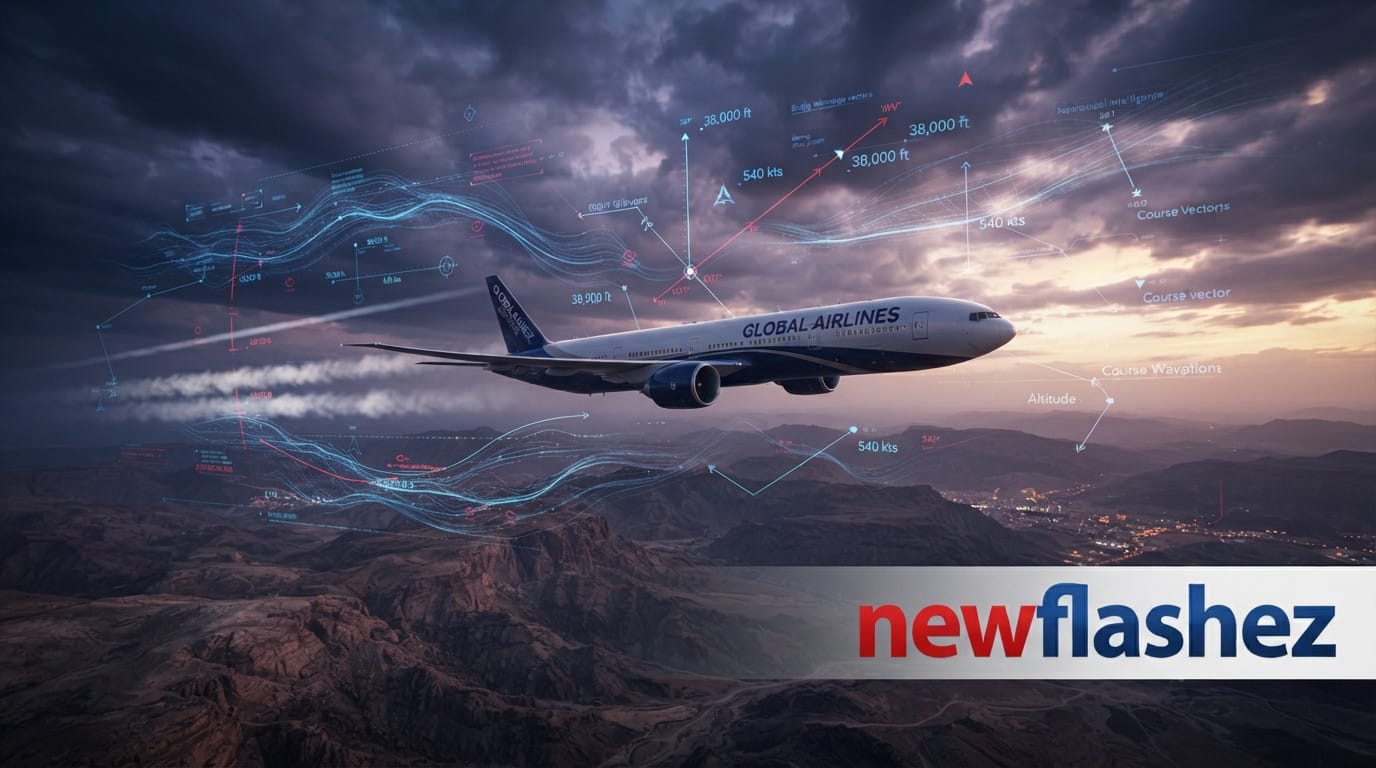
Washington and regional capitals are recalibrating their security postures following high-level intelligence disclosures regarding the recent Trump Iran FlyDubai plane attack. President Donald Trump asserted on Thursday that the Iranian government may maintain direct links to the co-pilot who attempted to crash a commercial airliner bound for Israel. According to an exhaustive investigation detailed by the Associated Press, the suspect—identified as a citizen of Oman—stabbed the flight captain and aggressively attempted to seize control of the aircraft mid-flight. Quick-thinking passengers and crew members intervened to subdue the attacker, enabling a safe emergency landing in Saudi Arabia.
The incident has triggered intensive multilateral diplomacy and intelligence-sharing between Saudi Arabia, the United Arab Emirates, Oman, and Israel. Late Thursday, Saudi authorities transferred the suspect to the UAE as joint investigative proceedings continue. While initial security assessments explored potential mental health anomalies or isolated workplace grievances, high-level political declarations have dramatically shifted the geopolitical trajectory of the probe. President Trump publicly declared that emerging intelligence indicators point toward state-sponsored involvement by Tehran, while Israeli Prime Minister Benjamin Netanyahu characterized the perpetrator as an active Islamic radical.
As regional tensions reach a critical inflection point, analysts note that diplomatic channels are severely strained; further context on these diplomatic frictions is detailed in US Iran Tensions: Escalating Threats Strain Omani Diplomacy.
Security Protocols and Pilot Heroism Amid Regional Tensions

The mechanics of the Trump Iran FlyDubai plane attack exposed critical vulnerabilities in commercial cockpit security protocols operating within contested airspace. Despite sustaining severe stab wounds during the initial assault, the wounded flight captain managed to unlock the cockpit door, allowing courageous passengers to breach the flight deck and neutralize the assailant. Israel’s government announced plans to confer special state honors upon five Israeli passengers whose decisive actions prevented catastrophic loss of life.
Concurrently, the geopolitical fallout is manifesting in rapid military force deployments. The United States Department of Defense is preparing to dispatch an additional 9,000 military personnel to the Middle East, while President Trump has issued explicit warnings threatening to resume heavy kinetic strikes against strategic Iranian infrastructure. Defense analysts emphasize that this escalation tests the deterrence thresholds of commercial aviation security, transforming civil transit corridors into potential vectors for hybrid warfare. Authoritative updates and breaking coverage can be tracked directly via the Associated Press.
The So What?
The formal attribution of state backing to commercial aviation sabotage marks a dangerous watershed in modern geopolitical conflict. By weaponizing insider threats within civilian transport networks, hostile actors lower the threshold for asymmetric warfare, bypassing conventional military deterrence frameworks. For Washington, leveraging this incident provides immediate justification for force projection, troop reinforcements, and potential retaliatory strikes against Iranian assets. This establishes a perilous precedent where operational anomalies are rapidly militarized into pretexts for broader regional campaigns, permanently altering risk management calculi for international air carriers operating near flashpoints.
Frequently Asked Questions
Q1: What occurred during the Trump Iran FlyDubai plane attack?
A: A commercial FlyDubai flight bound for Israel experienced an onboard security breach when the co-pilot stabbed the flight captain and attempted to crash the aircraft before passengers and crew subdued him, landing safely in Saudi Arabia.
Q2: What evidence links Iran to the incident?
A: President Donald Trump and Israeli Prime Minister Benjamin Netanyahu stated that intelligence indicators point toward Iranian state links and Islamic radicalization, though neither leader has publicly released detailed classified documentation substantiating the claims.
Q3: How is the international community responding militarily and diplomatically?
A: The United States is deploying 9,000 additional troops to the Middle East and threatening heavy military strikes against Iran, while regional intelligence agencies in Saudi Arabia, the UAE, Oman, and Israel coordinate joint investigative proceedings.
Explore further developments in our Politics News Archive.
