

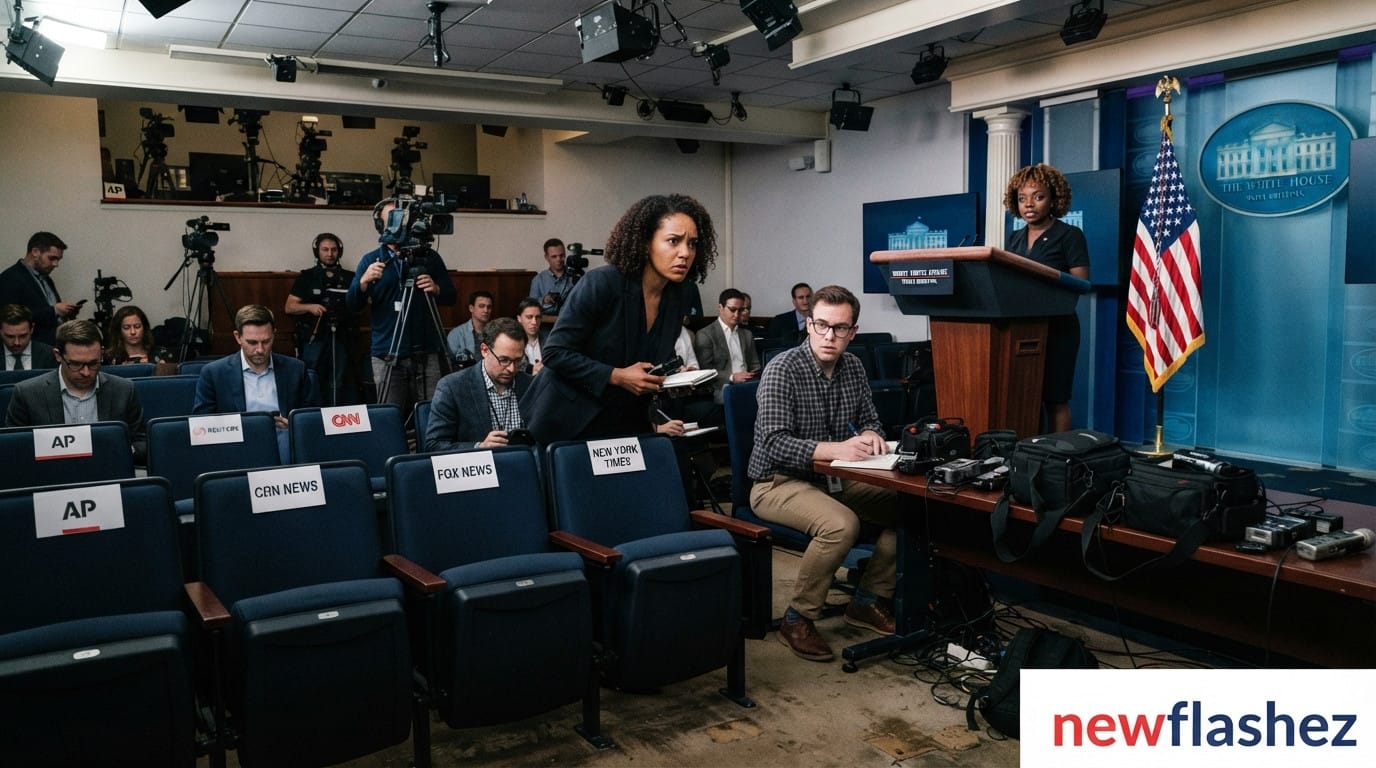
The political landscape in Washington D.C. has been rocked by an escalating confrontation between the executive branch and major news organizations.To explore more breaking developments and comprehensive reports, visit the newflashez politics department. The controversy centers around a strict White House press ban that has barred CNN journalists and selected media correspondents from covering high-profile presidential events and state dinners. This unprecedented media blockade has sent shockwaves through the American journalistic community, raising profound questions about transparency, First Amendment rights, and the boundaries of executive authority.
At the same time, this administrative standoff coincides with a major legislative clash on Capitol Hill. The administration has unilaterally moved to rescind nearly $1 billion in congressionally approved funding designated for critical public health and social programs. Lawmakers from both sides of the aisle are scrutinizing the legality and implications of these sweeping budget cuts, which bypass traditional legislative oversight and disrupt vital community services nationwide.
The Anatomy of the White House Press Ban
The roots of the White House press ban trace back to mounting tensions over press pool access and aggressive reporting on executive decisions. According to recent reports from Courthouse News and The Guardian, administration officials restricted access to key presidential engagements after disputes over coverage protocols and editorial tone. Press freedom advocates argue that penalizing specific news outlets sets a dangerous precedent for democratic institutions and undermines the constitutional role of an independent press.
Media unions, legal scholars, and journalism associations have condemned the move as a direct infringement on constitutional protections. White House spokespersons, however, defend the restrictions as necessary operational adjustments, citing security and protocol concerns. Despite these official justifications, the backlash continues to grow, drawing sharp rebukes from media watchdogs across the country who monitor executive overreach.
Congressional Pushback and Fiscal Conflict
Parallel to the media standoff, the administration’s decision to cancel nearly $1 billion in congressionally mandated funding has triggered fierce battles in Congress. These funds, previously appropriated by lawmakers for community health initiatives, mental health services, and social welfare programs, are now frozen indefinitely.
Financial analysts and congressional aides point out that withholding funds authorized by federal statute challenges the fundamental constitutional balance of power. The Impoundment Control Act strictly limits executive authority to withhold spending approved by Congress, setting the stage for imminent legal battles in federal courts and intense oversight hearings on Capitol Hill. State governors and municipal leaders who rely on these federal grants have expressed grave concern over the sudden disruption of essential services.

Legal and Institutional Ramifications
The convergence of media restrictions and fiscal maneuvers highlights a highly volatile period in American governance. Observers note that controlling press access while simultaneously bypassing legislative spending authority signals a more assertive executive posture that tests existing legal frameworks.
When citizens are denied independent reporting from the halls of power, democratic accountability suffers. The White House press ban is not merely an administrative dispute between reporters and officials; it strikes at the core of how information flows in a democratic society. As legal teams prepare formal challenges and lawmakers draft aggressive oversight letters, the outcome of these twin crises will shape federal press relations and executive power for years to come.
The Path Forward
As Washington navigates this dual crisis, the stakes for institutional integrity have higher than ever. The ongoing fallout from the White House press ban and the fierce resistance against the $1 billion funding cancellations demonstrate that the checks and balances defining American democracy face severe tests. Whether through judicial intervention or congressional pushback, the resolution of these conflicts will redefine the boundaries between the presidency, the press, and the legislative branch for the foreseeable future.
