

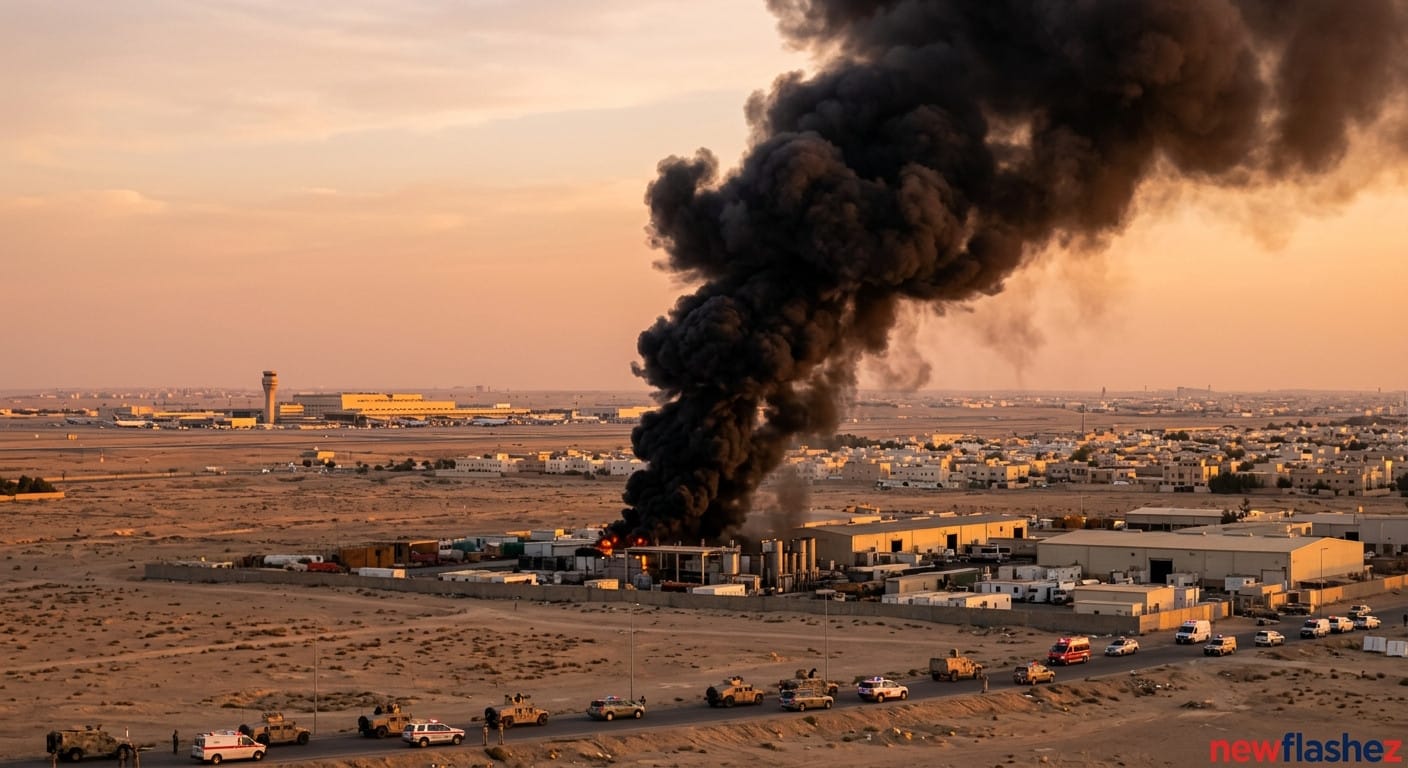
RIYADH, Saudi Arabia — Houthi attacks on Saudi Arabia have escalated drastically, with visible explosions and smoke reported near Riyadh’s international airport, creating fresh instability in the region. The recent strikes, launched by the Yemen-based Houthi movement, target critical infrastructure inside the Saudi capital, including locations in close proximity to major transport hubs.
According to separate reports by The Guardian and The Washington Post, which cite eyewitness accounts and verified video footage, multiple columns of thick black smoke were seen rising on the outskirts of Riyadh. These plumes appeared shortly after Houthi military officials announced a new wave of operations targeting specific sites within the kingdom. The reports confirm that King Khalid International Airport, a key gateway for the country, was one of the targeted locations, though the full extent of the damage remains unclear.
Aviation authorities in Saudi Arabia have not formally commented on the impact to airport operations, but observers note interruptions and flight delays are increasingly common following such incidents. The Houthi attacks on Saudi Arabia underscore the group’s sustained ballistic missile and drone capabilities, which continue to threaten key urban centers despite years of military intervention.
Houthi Attacks on Saudi Arabia Target Critical Infrastructure
The timing and scale of the escalation raise significant political and military questions. The Guardian reported that Washington held back on a series of intense, planned airstrikes against Houthi targets just prior to this latest surge in Houthi attacks on Saudi Arabia. This U.S. decision to exercise restraint, aimed at de-escalating the conflict and preventing broader regional warfare, is now facing intense scrutiny.
Houthi forces, apparently emboldened by the perceived shift in U.S. direct military engagement, have moved aggressively to secure strategic territory inside Yemen, particularly around the hydrocarbon-rich Marib region. These battlefield advancements coincide with the Houthi attacks on Saudi Arabia, suggesting a coordinated dual strategy to expand their territorial control and force political concessions on a regional scale. The group’s ability to launch complex, long-range attacks into the Saudi heartland remains a significant leverage point in any future negotiations.

The Escalation in the Middle East Conflict
The Houthi attacks on Saudi Arabia carry profound implications for regional stability and global energy markets. Saudi Arabia, a major oil producer, sees any targeting of its infrastructure as a threat to its core national security and economic interests. The attacks near the capital’s airport further damage international confidence and perception of security.
For the United States, the escalation is a complex challenge. Washington has consistently sought to support its Saudi allies while minimizing direct military overreach, a strategy that is now being tested. The increase in Houthi attacks on Saudi Arabia forces U.S. policymakers to balance support for security partners against the risks of deeper involvement in the Yemen conflict, which has been characterized by severe humanitarian crises.
Furthermore, international oil markets are closely monitoring the situation. Any disruption to facilities or transport networks in a leading oil-exporting nation like Saudi Arabia can quickly lead to price fluctuations. The direct targeting of critical infrastructure by Houthi attacks on Saudi Arabia exacerbates these concerns and contributes to a heightened state of alert.
The current situation is fluid, and the frequency of Houthi attacks on Saudi Arabia ensures the conflict remains a primary focus of U.S. foreign policy and international diplomacy in the Middle East. Observers suggest that without a meaningful diplomatic breakthrough or a decisive shift in military dynamics, the cycle of cross-border attacks and subsequent instability is likely to continue.
Additionally, regional defense analysts emphasize that sustained cross-border operations complicate diplomatic efforts aimed at securing a lasting ceasefire. As regional powers attempt to balance national security with critical economic development goals, the international community continues to push for immediate de-escalation. Resolving the underlying geopolitical triggers behind Houthi attacks on Saudi Arabia remains a vital priority for achieving long-term stability across the Middle East.
Learn more about U.S. foreign policy in the Middle East and related developments in our Politics Category section.
