

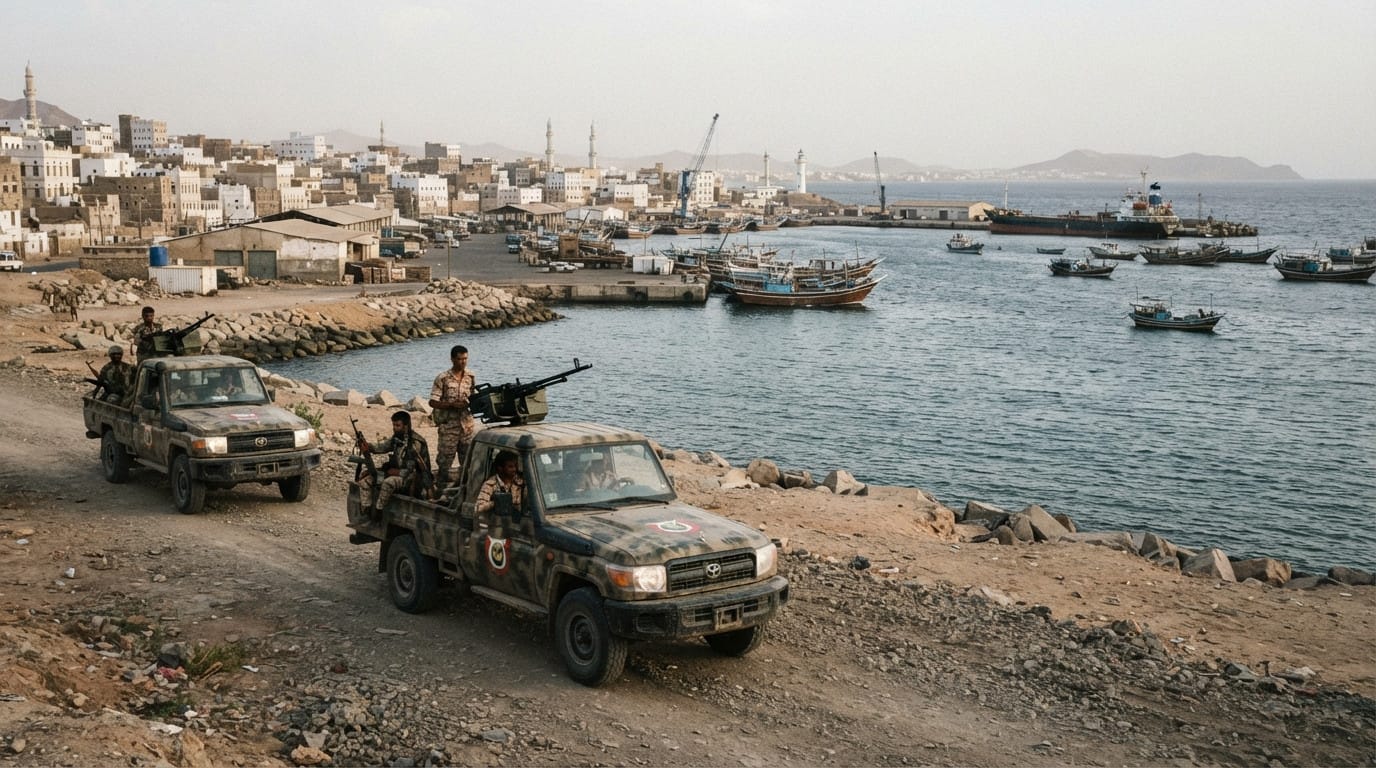
CAIRO — A dangerous new phase of conflict unfolded across the Arabian Peninsula this week as relentless Houthi attacks reshaped the military landscape in Yemen, according to detailed dispatches published by Associated Press (apnews.com). The Iran-backed rebel group successfully seized control of the strategic Red Sea port city of Mokha, marking their most significant territorial advance since a landmark truce was established in 2022. This sudden escalation has sent shockwaves through international diplomatic circles and heightened fears of renewed humanitarian catastrophe.
The capture of Mokha places insurgent forces roughly 50 miles from the critical Bab el-Mandeb Strait, a narrow maritime chokepoint through which approximately twelve percent of global commerce and vital energy shipments pass. Military analysts and shipping experts interviewed by Associated Press (apnews.com) warn that ongoing Houthi attacks in the corridor could permanently sever key supply chains connecting Asia and Europe.
The Strategic Impact of Recent Houthi Attacks on Red Sea Shipping
The rapid offensive caught local residents and regional observers off guard. As rebel columns advanced along the western coast, thousands of families fled in panic toward government-held southern territories. Local medical personnel reported abandoning major health facilities after insurgent fighters established military checkpoints inside municipal boundaries. According to United Nations agencies cited by Associated Press (apnews.com), tens of thousands of civilians have been newly displaced within days, exacerbating an already fragile humanitarian crisis rooted in years of brutal warfare.
Compounding the crisis, the intensification of Houthi attacks has disrupted alternative trade routes that energy markets relied upon after previous disruptions in the region. While regional partners sought alternative pipeline corridors to bypass hazardous zones, renewed military friction has severely curtailed those adjustments. Defense experts emphasize that the mountainous terrain surrounding Taiz provides insurgents with tactical advantages, making defensive operations exceedingly difficult for internationally recognized government forces.

International Concern Over Escalating Houthi Attacks
During an emergency session of the United Nations Security Council, international envoys voiced grave alarm over the deteriorating security situation. U.N. Special Envoy for Yemen Hans Grundberg cautioned member states that the nation faces the harsh reality of returning to full-scale civil war unless decisive diplomatic safeguards are implemented. Furthermore, diplomatic representatives from neighboring states declared that their governments retain the absolute right to protect territorial integrity and secure vital economic infrastructure against sustained Houthi attacks.
Intelligence assessments highlight that these aggressive maneuvers provide insurgent leaders with enhanced leverage in broader geopolitical negotiations. Despite ongoing international naval patrols and targeted defensive measures, the frequency and precision of Houthi attacks demonstrate a persistent operational capability that continues to challenge Western and regional deterrence strategies.
As diplomatic channels strain under the weight of renewed hostilities, the immediate future of Yemen hangs in a delicate balance. Observers tracking the situation through Associated Press (apnews.com) note that without immediate intervention, the compounding effects of persistent Houthi attacks will likely dictate the economic and political stability of the entire Middle East for months to come.
For continuous tracking of international conflicts and market impacts, check our dedicated updates in the Politics Section.
