

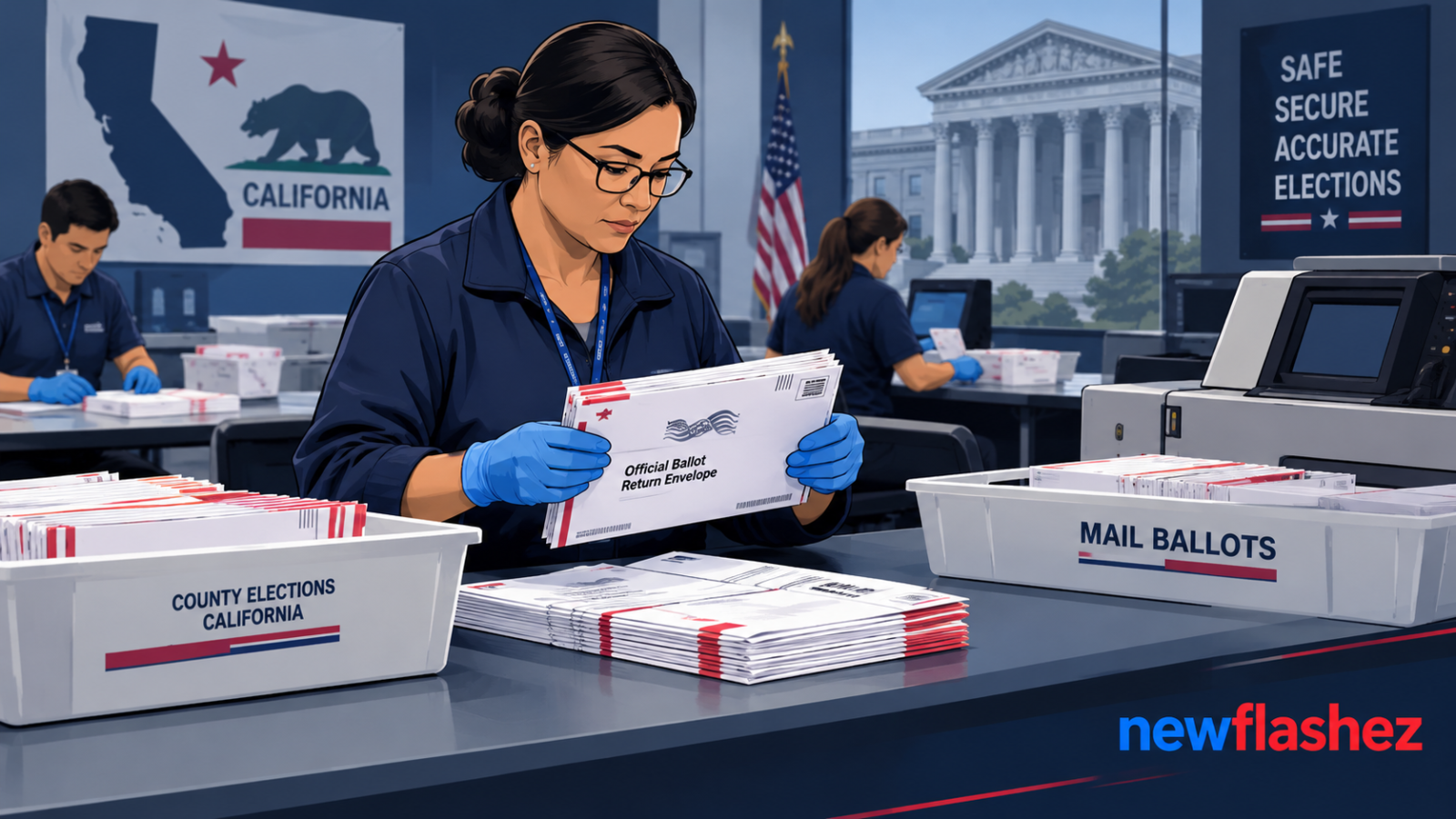
A federal appeals court on October 26 rejected the Trump administration’s emergency request to prevent California election officials from counting approximately 20,000 mail-in ballots associated with voters whose citizenship the federal government has questioned. The 2-1 decision by the U.S. Court of Appeals for the Ninth Circuit did not resolve the underlying dispute, sending the case back to a federal district court with a hearing scheduled for October 27, just days before the November 3 midterm elections.
The case raises significant questions about the federal government’s authority over election administration, the reliability of voter eligibility data and the potential consequences of changing ballot-processing procedures while an election is underway.
Why Is the Trump Administration Challenging California’s Ballots?
The U.S. Department of Justice sued California officials on October 15, seeking an order that would prevent the state from counting mail-in ballots associated with approximately 20,000 registered voters whom federal officials identified as likely noncitizens.
According to the federal government’s court filings, agencies within the Department of Homeland Security analyzed voter-registration and other records to identify individuals they believed might not be eligible to vote in federal elections. The administration asked California officials to review the list, verify the individuals’ citizenship and set aside their ballots until their eligibility could be established.
Federal law prohibits noncitizens from voting in federal elections. The administration argues that California should not count ballots from individuals it has identified as potentially ineligible until their citizenship status is verified.
California officials have disputed the accuracy and reliability of the federal government’s information. They have also argued that the requested measures would conflict with existing election procedures and create significant administrative difficulties while voting is already underway.
The allegations against the individuals identified on the list have not, by themselves, established that those voters illegally cast ballots.
Sources: Associated Press | U.S. Department of Justice court
What Did the Ninth Circuit Decide?
The Ninth Circuit rejected the Justice Department’s emergency appeal in a 2-1 decision on October 26. The majority concluded that the federal government had not given the lower court sufficient opportunity to consider its request for temporary relief before seeking intervention from the appeals court.
The ruling was procedural. The court did not issue a final decision on whether the disputed ballots should be counted, nor did it conclusively resolve the administration’s broader legal arguments.
Two judges in the majority also expressed concerns about the requested intervention in separate opinions. They questioned the legal basis for requiring California to change its election procedures and highlighted the risks of attempting to isolate and verify thousands of ballots shortly before Election Day.
Judge Patrick J. Bumatay dissented, arguing that the federal government had a legitimate interest in preventing ineligible votes from being counted in federal elections.
The disagreement illustrates the central legal tension in the case: how to enforce federal voting restrictions while respecting the legal framework governing state election administration.
The appeals court’s decision allowed the lower-court proceedings to continue without granting the administration’s requested emergency intervention at that stage.
Source: Los Angeles Times — Ninth Circuit denies federal appeal over 20,000 ballots
Why Does the Timing Matter?
The dispute is unfolding immediately before the November 3, 2026, midterm elections, when voters will decide congressional races and other contests across the country.
California officials have already begun processing mail-in ballots. According to reporting by the Los Angeles Times, millions of ballots had been cast statewide, including hundreds of thousands in Los Angeles County, before the appeals court issued its decision.
The administration’s proposed remedy would require election officials to identify the affected ballots, keep them separate from other ballots and verify the citizenship of the associated voters before tabulation.
California officials argue that implementing those requirements at this stage could disrupt established procedures and risk delaying or excluding ballots cast by eligible citizens.
The dispute is therefore not limited to whether federal authorities can investigate suspected violations of voting laws. It also concerns the practical and legal limits on changing election procedures after voting has begun.
The distinction matters because a voter’s appearance on a government list does not automatically establish that the person is ineligible. Any verification process must account for the possibility of inaccurate or incomplete records.
The U.S. Constitution gives states a central role in determining the time, place and manner of federal elections, subject to Congress’s constitutional authority to regulate those elections.
The Trump administration argues that federal law provides a basis for intervention when state procedures allegedly permit ineligible voting. California, meanwhile, maintains that the federal government has not established a sufficient legal basis for the extraordinary measures it seeks.
The Ninth Circuit’s October 26 decision did not settle that broader disagreement. Its ruling focused on the procedural circumstances surrounding the emergency appeal, while the underlying case remained before the district court.
The case also highlights the difference between enforcing voter eligibility requirements and requiring election administrators to change how they handle ballots. Even where the parties agree that noncitizens cannot vote in federal elections, they can disagree over how suspected violations should be investigated and what evidence is sufficient to justify withholding ballots.
The outcome could help clarify how federal agencies and state election officials must navigate these competing responsibilities in future disputes.
What Happens Next?
U.S. District Judge David O. Carter had scheduled a hearing for October 27 to consider the Justice Department’s request for temporary relief. The administration sought an order preventing the tabulation of the disputed ballots until citizenship could be verified.
As of the latest reports verified for this article, the district court’s final decision following that hearing could not be independently confirmed. The case should therefore be treated as unresolved at this stage.
The next significant development will be the district court’s ruling on the requested relief. Depending on that decision, either side could pursue further legal action, subject to the applicable court procedures.
The timing creates practical pressure because election officials must continue processing ballots under established deadlines while the litigation proceeds. However, the precise effect on ballot counting will depend on the court’s orders and any subsequent appeals.
For now, the Ninth Circuit’s decision should not be interpreted as a final ruling that all disputed ballots are eligible, or that the federal government has no authority to enforce voting laws. It resolved the immediate appeal on procedural grounds, leaving the central dispute for further consideration.
Why This Dispute Matters for American Voters
The California case illustrates the challenges of resolving election-related legal disputes close to Election Day. Courts must consider the government’s responsibility to enforce voting laws alongside the rights of eligible voters and the need for election officials to follow workable, established procedures.
For voters, the distinction between an allegation and a verified finding is particularly important. Being identified on a list of suspected ineligible voters is not the same as a legal determination that a person is not a citizen or has voted unlawfully.
The case also demonstrates why judicial decisions must be read carefully. A court can reject an emergency request because of procedural deficiencies without deciding the underlying legal questions. Subsequent proceedings may produce a different ruling on the merits.
With the November 3 election approaching, the district court’s decision and any further appellate action will determine how the immediate dispute proceeds.
Frequently Asked Questions
1. Why is the Trump administration challenging approximately 20,000 California ballots?
The Justice Department says federal agencies identified approximately 20,000 registered voters whom it believes may be noncitizens. It wants California officials to verify their citizenship and set aside their ballots until their eligibility is established. California officials dispute the reliability of the information and the legality and feasibility of the requested measures.
2. Did the Ninth Circuit rule that California must count all the disputed ballots?
No. On October 26, the appeals court rejected the administration’s emergency appeal on procedural grounds. It did not issue a final ruling on the eligibility of the ballots or resolve the underlying legal dispute.
3. When will the California ballot dispute be resolved?
A district court hearing was scheduled for October 27, 2026. The final outcome could not be independently verified from the latest available reports. Further court proceedings or appeals may follow, depending on the judge’s decision.
Follow More U.S. Political News
Follow the latest developments in election law, federal policy and Washington politics with newFlashez Politics.
Editorial note: This article is an independent synthesis of cited reporting and publicly available court materials. It is not original court reporting by newFlashez.
